Origins of Lion Dance in Singapore – History, Traditions & Cultural Impact
The origins of lion dance in Singapore – history, traditions & cultural impact trace back to the early Chinese immigrant communities of the 19th century. Recent archival discoveries by the Singapore Chin Woo (Athletic) Association and scholarly works, such as Pauline Loh’s research, have brought new insights into how the lion dance evolved from clan-based ritual performances into a vibrant symbol of cultural identity.
These sources reveal that both Northern and Southern lion dance styles took root in Singapore, shaped by waves of migration and the active role of clan associations and martial arts groups.
Lion dance remains deeply woven into Singapore’s major festivals, particularly during Chinese New Year, where troupes display a blend of traditional movements and modern choreography. The evolution of costumes, music, and performance styles reflects broader shifts in society, with each era leaving its mark on this living tradition. From its use as a morale booster during the Japanese occupation to its significance in post-war celebrations, lion dance continues to adapt while preserving its historical roots.
Origins of Lion Dance in Singapore
Lion dance is woven into the cultural fabric of Singapore, representing both tradition and transformation. Its journey here mirrors the story of the Chinese diaspora, adapting to changing times while preserving deep-rooted customs. Singapore’s lion dance scene showcases a blend of Northern and Southern styles, each shaped by waves of immigrants and the evolving needs of local communities.
Recent archival releases from organisations like the Singapore Chin Woo (Athletic) Association have shed new light on the development of lion dance in the city-state, especially highlighting rare photographs and documents dating back to the 1930s. These resources offer a window into how lion dance traditions were brought over, reinterpreted, and passed down through generations.
Today, lion dance continues to play a central role in festivals and celebrations across Singapore. New troupes are adding creative elements to performances, blending tradition with innovation to keep this art alive for future generations. Wolf Events stands at the forefront of this movement—book an appointment via WhatsApp or our Contact Form if you want to experience an authentic performance.
Early Beginnings and Chinese Immigration
The roots of lion dance in Singapore can be traced back to the mid-19th century, closely linked to early waves of Chinese immigration. Settlers from southern China brought with them their customs, including vibrant lion dance rituals for auspicious occasions like Lunar New Year and business openings. These performances were more than entertainment—they signaled unity and hope for good fortune among tight-knit immigrant communities.
Over time, two main styles emerged – the Southern style with its distinctive wide-eyed lions and powerful drumming, and the rarer Northern style, which recent research has shown was present as early as the 1930s. The Northern style was preserved by associations such as Chin Woo, whose archives now provide invaluable insights into its local evolution.
| Lion Dance Style | Main Features | Key Influence in Singapore |
|---|---|---|
| Southern | Expressive eyes, energetic movements | Predominant among early Cantonese immigrants |
| Northern | Shaggier mane, acrobatic leaps | Documented since 1930s by Chin Woo Association |
The Role of Clan Associations and Martial Arts Groups
Clan associations played a pivotal role in nurturing lion dance traditions within Singapore’s Chinese community. These groups provided not just financial support but also training grounds for young performers. Martial arts schools often doubled as lion dance troupes—skills in kung fu complemented the athleticism needed for dynamic performances. By organising competitions and public showcases during key festivals, clan associations helped raise standards while fostering friendly rivalry between troupes.
This environment encouraged creativity in costume design, music arrangement, and choreography—a legacy that remains visible today.
Lion Dance During Wartime and Post-War Recovery
Wartime Singapore saw many traditional practices disrupted—including lion dance. During the Japanese occupation (1942–1945), public gatherings were tightly controlled or banned outright. Troupes went underground or adapted their activities for survival, with some using their skills to secretly boost morale within local communities. After World War II ended, lion dance took on new meaning as a symbol of resilience and collective renewal.
Post-war celebrations often featured elaborate performances that reinforced hope and unity amidst rebuilding efforts. This period marked a resurgence in interest and participation—laying foundations for today’s vibrant scene.
Wolf Events Fact Machine
Recent archival releases by the Singapore Chin Woo (Athletic) Association have revealed rare photographs documenting Northern Lion Dance troupes in Singapore dating back to the 1930s—a visual record previously unavailable to the public.
Northern vs Southern Lion Dance Styles in Singapore
Singapore’s lion dance scene is a living tapestry woven from the city’s unique history of Chinese immigration and vibrant community life. Both Northern and Southern lion dance styles have found a home here, each shaped by decades of adaptation and cultural exchange. The earliest roots trace back to the mid-1800s when Chinese immigrants brought their festive traditions and martial arts with them, laying the groundwork for what would become a cornerstone of local celebrations.
Recent archival discoveries by the Singapore Chin Woo (Athletic) Association have shed light on how the Northern style evolved since the 1930s, offering rare glimpses into its costumes, music, and choreography. Meanwhile, growing academic interest—highlighted by Pauline Loh’s research—shows how lion dance was not only a form of entertainment but also a vehicle for social cohesion among early clan associations.
These groups played crucial roles in nurturing troupes, preserving distinct techniques, and promoting solidarity during turbulent times such as the Japanese occupation and post-war recovery. Today, lion dance in Singapore remains dynamic and innovative. Troupes experiment with modern music and acrobatics while respecting centuries-old rituals. Whether at Chinese New Year or at community festivals, both Northern and Southern styles continue to dazzle audiences, reflecting the resilience and adaptability of Singapore’s multicultural spirit.
Key Differences in Performance and Costume
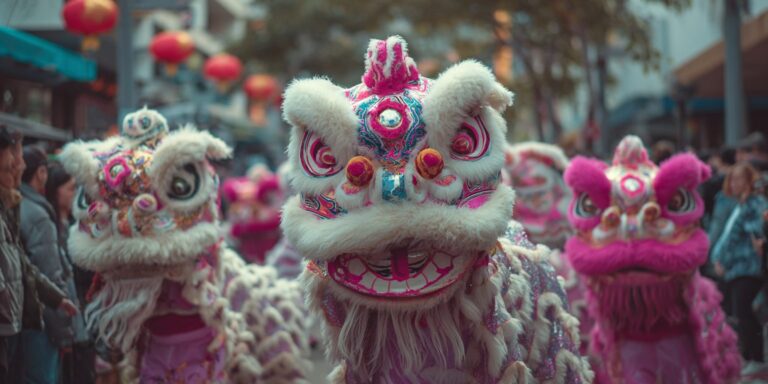
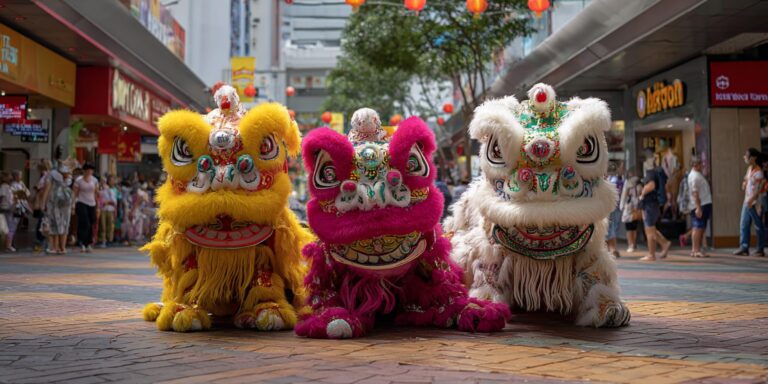
The most striking differences between Northern and Southern lion dances lie in their movement vocabulary and costume design. Northern lions are often more playful and acrobatic, with performances featuring gymnastic feats that mirror traditional martial arts routines. Their costumes tend to be shaggy with bright colours, expressive eyes, and a dog-like face that enables exaggerated expressions.
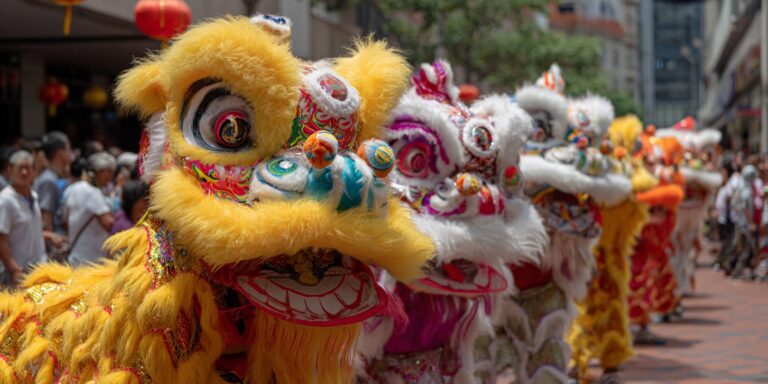
Southern lions—particularly those from Guangdong heritage—focus on powerful head movements, rhythmic drumming, and intricate footwork that mimics real lion behaviour. The Southern costume is recognisable by its larger head with prominent mouth features, mirror on the forehead for protection against evil spirits, and fur patterns inspired by mythological creatures. Music also differs – Northern troupes favour high-pitched cymbals and fast tempos while Southern teams use deep drums to set a dramatic pace.
These distinctions are not just aesthetic—they reflect deep-rooted regional identities that Singaporean troupes proudly uphold during public performances.
Notable Troupes and Historical Milestones
The growth of lion dance in Singapore owes much to pioneering troupes supported by clan associations such as the Hokkien Huay Kuan and Teochew Poit Ip Huay Kuan. These groups were instrumental in training generations of performers throughout the 20th century. A major milestone came in the 1930s when the Chin Woo (Athletic) Association introduced the Northern style to local audiences—a move documented through newly released archival photographs.
This period saw increasing cross-pollination between martial arts schools and performance troupes, enriching both styles. Lion dance took on renewed meaning during wartime when troupes performed to boost morale amidst hardship. In post-war years, these same groups became symbols of resilience as they led victory parades and community gatherings. Today’s leading troupes continue this tradition by blending historical elements with contemporary showmanship—ensuring that Singapore’s lion dance legacy remains both rooted and relevant.
Lion Dance in Singaporean Festivals and Celebrations
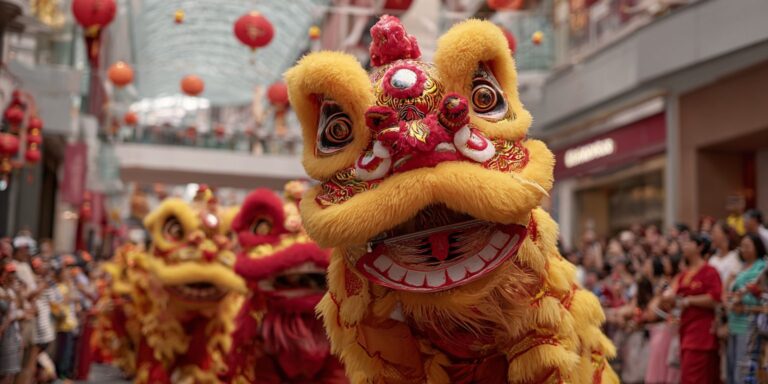
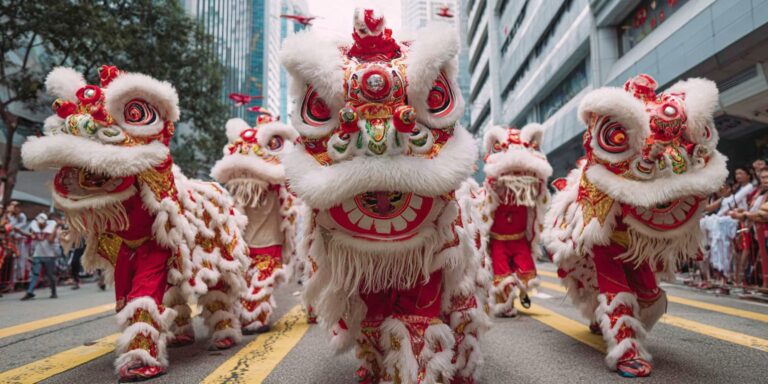
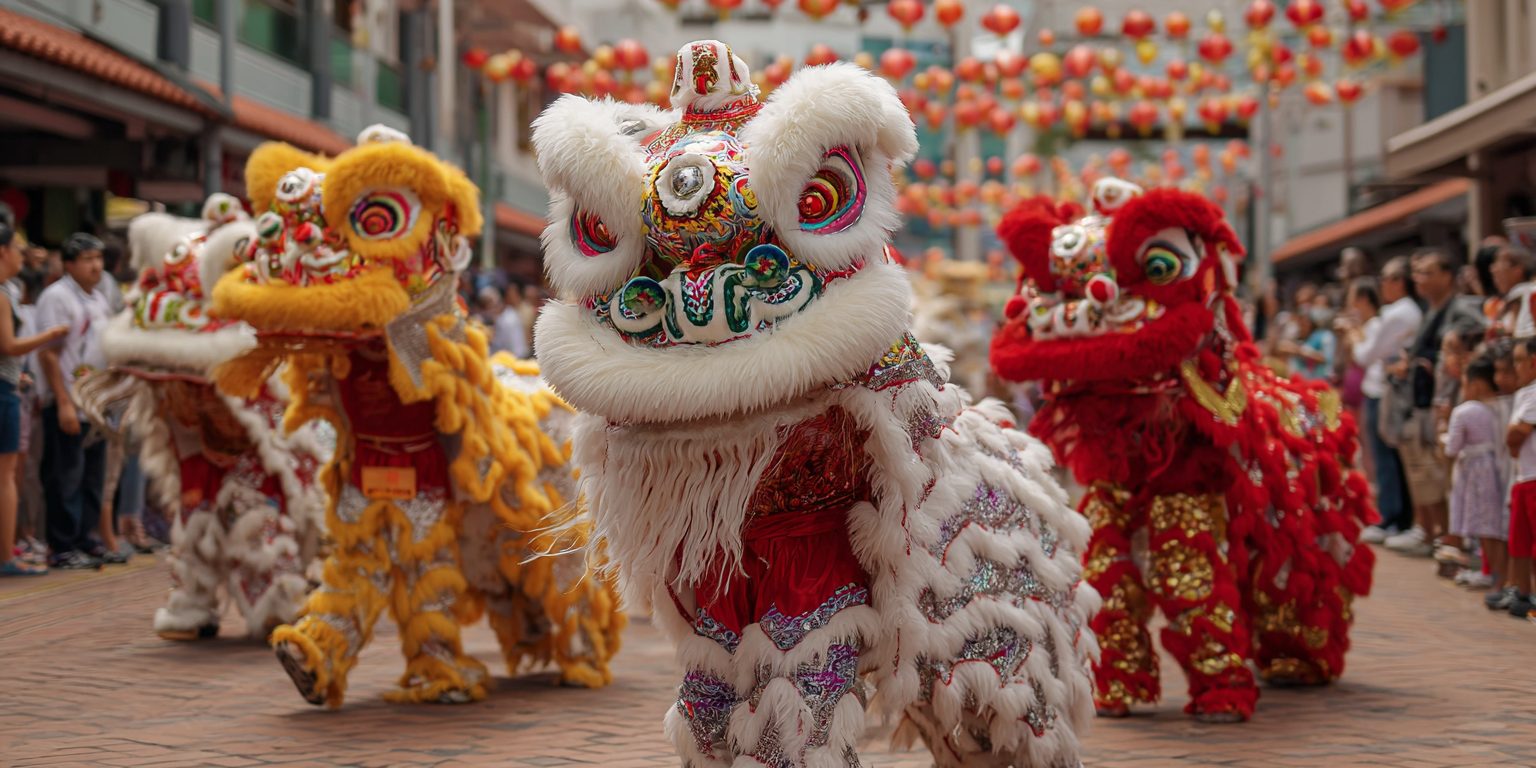
Lion dance continues to pulse at the heart of Singapore’s major festivals and community celebrations. Whether during Chinese New Year, Mid-Autumn Festival, or even National Day events, the rhythmic drumbeats and vibrant costumes bring people together in a display of unity and joy. These performances are not just for show—they are living links to the island’s immigrant roots, reflecting how Chinese traditions have blended with local culture over generations.
In recent years, both traditional and contemporary lion dance troupes have flourished across Singapore. Troupes now blend classic Southern and Northern styles, creating spectacles that captivate all ages. The influence of martial arts schools and clan associations remains strong, with many groups tracing their origins back to pioneers who arrived in the late 1800s.
Today’s performances often honour this heritage while embracing innovation, making lion dance as relevant now as it was a century ago.
| Festival | Role of Lion Dance | Key Features |
|---|---|---|
| Chinese New Year | Blesses homes & businesses; ushers in luck | Southern style; elaborate costumes; firecrackers |
| Mid-Autumn Festival | Community celebration; cultural showcase | Night performances; lantern parades |
| National Day | Showcases multicultural unity | Fusion performances; youth troupes |
| Company Openings | Brings prosperity to new ventures | God of Fortune mascots; drum ensembles |
Symbolism and Cultural Significance
The lion dance is steeped in symbolism—its every movement meant to ward off evil spirits and attract good fortune. For Singapore’s Chinese community, these dances represent resilience, hope, and the strength found in unity. During difficult periods such as the Japanese Occupation and post-war recovery, lion dance was a rallying point for morale and cultural identity.
Clan associations were instrumental in keeping traditions alive during times of hardship. Today, each performance is a tribute to ancestors who brought these customs from southern China in the 19th century. Lion dance remains a powerful reminder of shared heritage—its presence at festivals signals prosperity for the year ahead and honours those who built Singapore’s vibrant multicultural society.
Evolution of Costumes, Music, and Performance
Lion dance costumes in Singapore have seen remarkable transformation since early troupes wore simple cloth masks in the 1930s. Archival photographs from the Chin Woo Association reveal how influences from both northern and southern China shaped local designs—Northern lions with shaggy hair and expressive faces; Southern lions with intricate embroidery and bold colours.
Music has also evolved – Traditional gongs and drums remain central, but contemporary troupes sometimes add modern instruments or electronic effects for urban audiences. Performances have grown more athletic too—with daring jumps on high poles now common at competitions. Despite these changes, respect for tradition endures – many troupes still follow rituals that date back generations before each show.
Wolf Events celebrates this ongoing evolution by partnering with experienced performers who balance authenticity with creativity.
The Continuing Legacy of Lion Dance in Singapore
Lion dance in Singapore is more than a festive display—it’s a living thread connecting generations of Chinese immigrants to their heritage. Recent archival discoveries by the Singapore Chin Woo (Athletic) Association have brought to light rare photographs and documents, revealing the early days of Northern Lion Dance as far back as the 1930s.
These historical records show how lion dance adapted over decades, shaped by the evolving identity of Singapore’s Chinese community. Research, such as Pauline Loh’s detailed account, traces the roots of lion dance in Singapore to the 1850s when the first waves of Chinese immigrants brought their customs to these shores.
Clan associations and martial arts groups became the backbone of this tradition, preserving unique styles and passing down rituals that defined both Northern and Southern forms. Today, these troupes maintain a strong presence at major festivals—from Chinese New Year to National Day—each performance blending old-world symbolism with modern energy. As Singapore’s society continues to evolve, so too does its lion dance scene.
Troupes now experiment with music and costumes while honouring traditions like warding off evil and bringing good luck. The legacy of lion dance endures not only through public celebrations but also in the stories of those who performed during turbulent times, such as wartime and post-war Singapore. The art form remains a vivid symbol of resilience, adaptation, and cultural pride—an enduring spectacle that invites every new generation to join in its story.
Common Questions
When did lion dance first arrive in Singapore?
Lion dance was introduced to Singapore by Chinese immigrants in the 19th century, with documented performances by troupes as early as the 1850s and 1930s.
What is the difference between Northern and Southern lion dance styles?
Northern lion dance features larger, more vibrantly colored lions with playful movements, while Southern lion dance is characterized by a prominent horn and more martial, dramatic gestures.
Why is lion dance important in Singapore’s culture?
Lion dance is a symbol of prosperity, protection, and community unity, playing a central role in festivals, temple events, and celebrations among Singapore’s Chinese community.
How did lion dance survive during challenging periods like World War II?
Despite a decline during the Japanese occupation, lion dance troupes persisted, with many believing the guardian lion spirit helped protect and rebuild the community after the war.
Who organizes lion dance performances in Singapore?
Lion dance performances are typically organized by clan associations, martial arts schools, and cultural troupes, some of which have histories dating back to the early 20th century.
Tracing the origins of lion dance in Singapore uncovers a rich tapestry woven from migration, resilience, and artistic evolution. From the bustling clan associations of the 19th century to today’s vibrant festival performances, every step of the lion holds echoes of Singapore’s multicultural journey. The dance’s adaptation through wartime struggles, its stylistic innovations, and its enduring role in celebrations all highlight how tradition thrives by embracing change.
If you’re keen to dig deeper into the history, traditions, and cultural impact of lion dance in Singapore, feel free to browse around our website for more insights. We regularly update our articles with new research, rare archival finds, and expert interviews—so there’s always something new to discover about this iconic art form.